The world's first AI-native school

Every student is about to have a tutor smarter than their teacher.

AI just cleared the floor school spent twelve years on. Arena is the school for what's left — agency, creativity, taste, craft — the things AI can't give them, and the things that decide a life.

Next pilot · International School of Beijing · August 5–9, 2026

Arena School crest — A · R · E · N · A · A school for the AI era · Est MMXXVI.
Why we're called Arena

The name is from Theodore Roosevelt.

On April 23, 1910, the year after his presidency ended, Roosevelt stood at the Sorbonne in Paris and gave a speech to a French audience that has been remembered, for over a century, by exactly one passage. It is the passage every founder eventually finds. It is the passage every kid who builds something hard eventually needs.

"It is not the critic who counts; not the man who points out how the strong man stumbles, or where the doer of deeds could have done them better. The credit belongs to the man who is actually in the arena, whose face is marred by dust and sweat and blood; who strives valiantly; who errs, who comes short again and again, because there is no effort without error and shortcoming; but who does actually strive to do the deeds; who knows great enthusiasms, the great devotions; who spends himself in a worthy cause; who at the best knows in the end the triumph of high achievement, and who at the worst, if he fails, at least fails while daring greatly."

Theodore Roosevelt · "Citizenship in a Republic" · Sorbonne, Paris · April 23, 1910

School today rewards the critic. The kid who points out how the answer could have been better. The kid who reads what was assigned and returns what was expected. Arena exists for the other kid. The one in the arena, with the dust and the sweat and the wrong first draft. The one who, when school says that's not what we're learning this week, builds it anyway.

Why I'm building it

My parents bet their lives on education. It worked. The path won't work again.

My parents were Chinese immigrants who spent years in South Africa, cleaning houses and scrubbing toilets, because they could not speak English. They moved us to America so I could go to the right schools. Their whole life was a bet that if education worked out, the rest would follow. It worked. I went to Caltech. McKinsey. Goldman. Harvard Business School. I co-founded a company out of Y Combinator. I am writing this from Beijing, finishing a Schwarzman year at Tsinghua.

But I am sitting inside the very institutions that produced me, and I am certain the path that worked for me will not work for the generation behind me. The system that made me trained compliant high-scorers for a world that paid for compliance. That world is gone.

This is the debt I owe my parents. And the only honest answer I have for the kids I'll one day have.

Built by

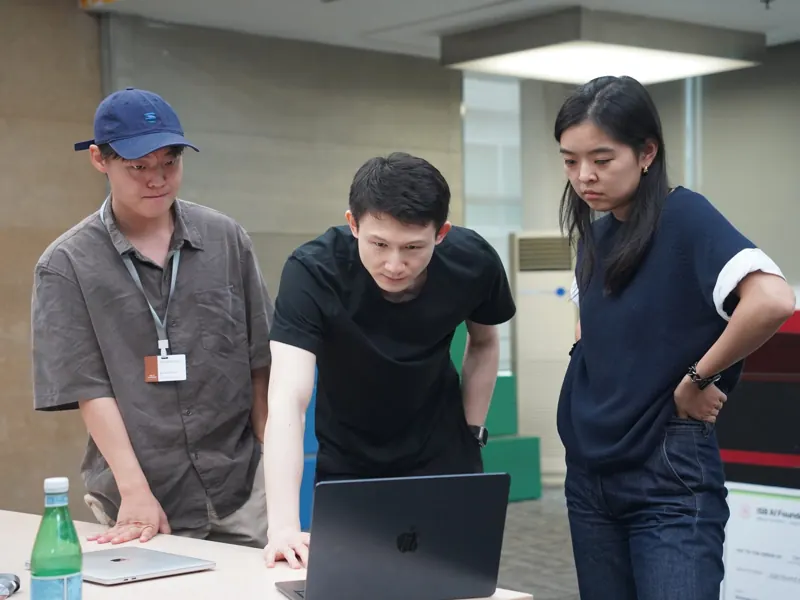
The team has been in the rooms it's trying to rebuild.

  • Caltech
  • McKinsey & Company
  • Goldman Sachs
  • Harvard University
  • Y Combinator
  • Tsinghua University
Why school exists the way it does

The architecture was built for a world that no longer exists.

200 yearsarchitecture unchanged

School wasn't designed to produce great thinkers. It was designed, two hundred years ago, to produce compliant industrial workers. Everything about its architecture reinforces this. The ringing bells signaling shifts. The fixed class periods. The regimented schedules. The requirement to raise your hand just to use the bathroom. Bells were factory whistles. Rows of desks were assembly lines. Tests were quality control.

It conditions kids to internalize the rules of smallness. Don't stand out. Don't question. Don't be too passionate, too curious, too loud, too different. Just follow the script, hit the rubric, and keep your head down.

The real world doesn't reward rule-followers. It rewards builders, risk-takers, people who can decide what to make next. School teaches the opposite. And then we wonder why ambitious kids spend their twenties undoing it.

What AI changed

A tutor with infinite patience just went to roughly free.

A kid today can ask an AI any question and get a patient, correct, personalized answer. At 2am, in their language, without being made to feel stupid. The single scarcest resource in all of education — a tutor who has infinite time for you — just stopped being scarce. School has spent twelve years drilling the one thing AI now does better than any teacher. And it has spent almost no time on the things that actually decide a life.

The temptation is to treat this as a feature. Add an AI sidebar to the existing curriculum. Let students use ChatGPT for homework. That's the patch most schools are debating. But a patch on the wrong architecture is still the wrong architecture. The question isn't whether students should use AI in school. It is: what should school look like when every student already has a tutor smarter than their teacher in their pocket?

2.6× faster learning — Alpha School, two hours a day on AI-adaptive tools.
What's left for humans

The day school never had time for.

Agency

The discipline to decide what to build next.

Not "follow the assignment." Not "pick the right answer." Look at the world and pick what to make.

In the pilot, a ten-year-old picked sign language to speech — because his cousin is deaf. Nobody assigned it.

Taste

Knowing when the thing you made is good.

A rubric can tell you if you hit a target. Taste tells you if the target was worth hitting.

He kept iterating after the demo was over, because the first version wasn't good enough for his grandmother to actually use it.

Craft

The patience to finish, and to make it good.

The hardest gap to close. AI gives you a first draft instantly. Craft is what you do with the next twenty drafts.

Five days of drafts before he shipped. The hardest part wasn't the model. It was getting the audio clean enough for an elderly woman to trust it.

None of these are taught in any school I know.

How a day works

School has spent twelve years on the one thing AI now does best. Arena spends the day on everything it can't.

AI doesn't just hand every student a better tutor. It clears the floor — fast — so the whole day is finally free for the things school was never built to teach.

Mornings — the tutor that knows them.

An AI tutor that knows the student moves them through foundational knowledge at their own pace. Alpha School-style: 2.6× faster in two hours. The floor that took twelve years to cover is cleared before lunch.

Knowledge transfer · self-paced · benchmarked in public

Afternoons — building things that matter.

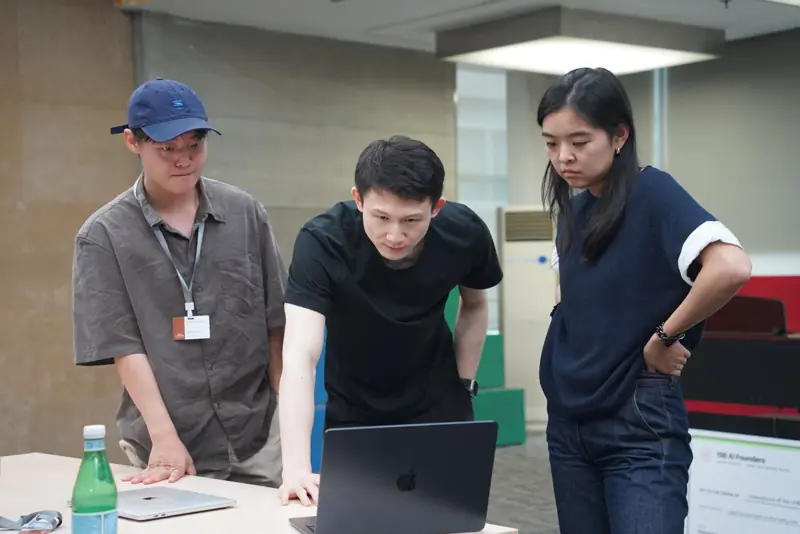
A company, a book, a song, a managed property, a public campaign — with a mentor who knows their name. Through the doing: agency, taste, creativity, judgment, the courage to build, and the discipline to make it good.

Real projects · human mentors · ship something true

Cohorts that travel — a school that meets the work where it is.

A five-day cohort doesn't need a campus. It needs a room, a teaching team, and a real problem worth shipping. We run the program at partner schools — the next is ISB in Beijing this August. The kids who most need this aren't all in the Bay Area.

Five-day format · co-run with the host school · curriculum stays with the team after we leave

The curriculum and playbooks will be open-sourced — so a charter in Detroit or a village in Bihar can run a cohort too. Not the point of Arena. A consequence.

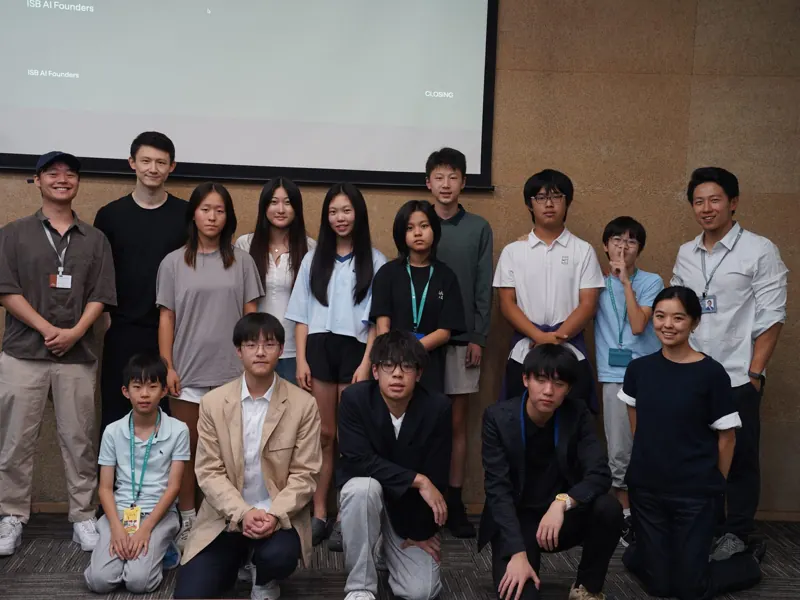
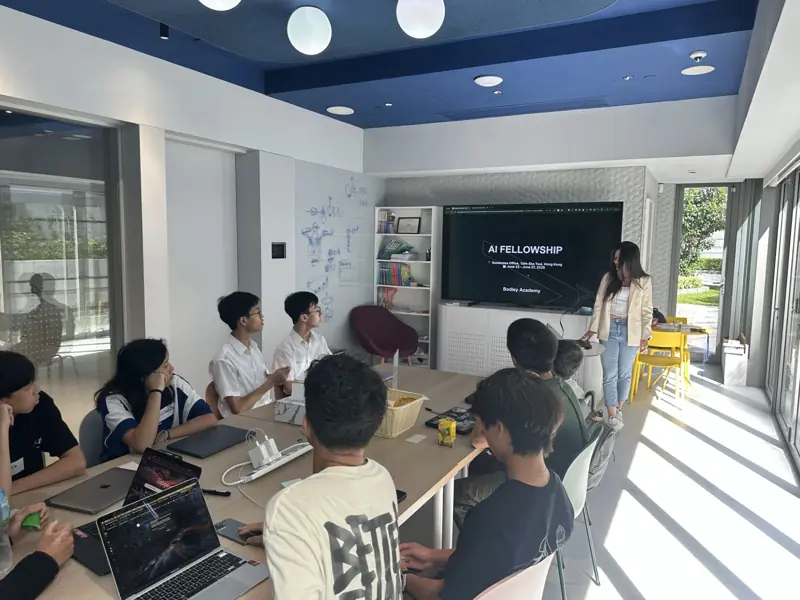
Case study · Bodley Academy · Hong Kong, Summer 2025

This isn't in theory. We've run it before.

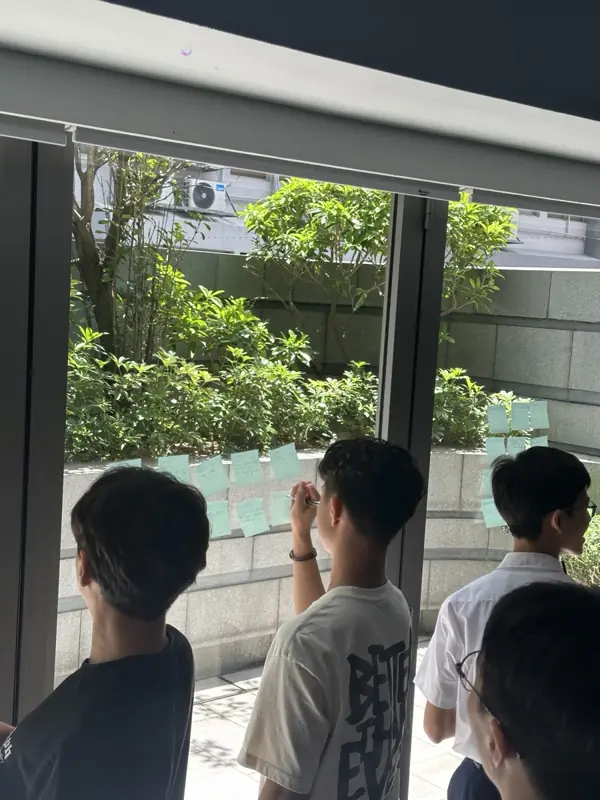
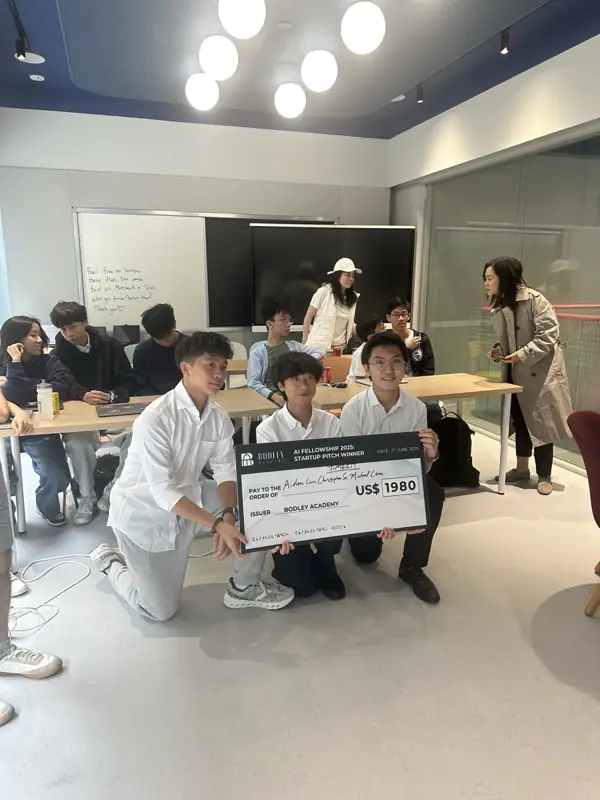
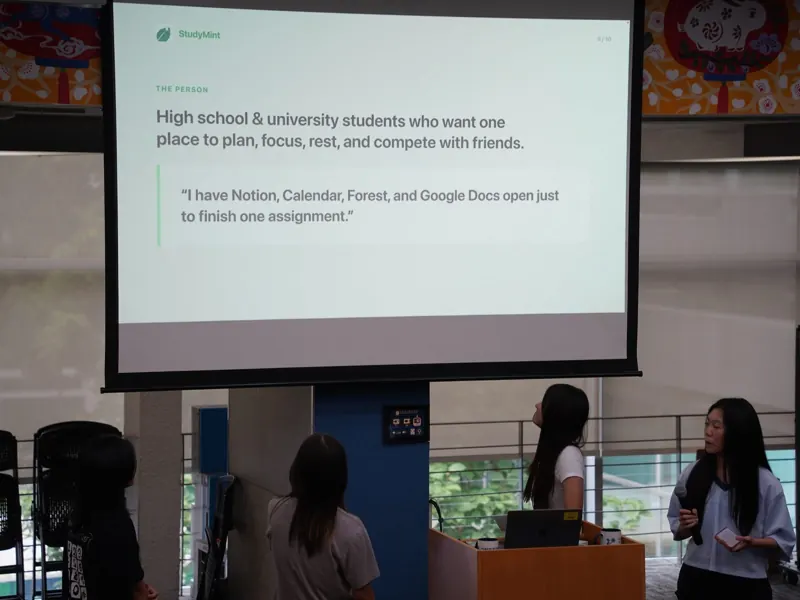
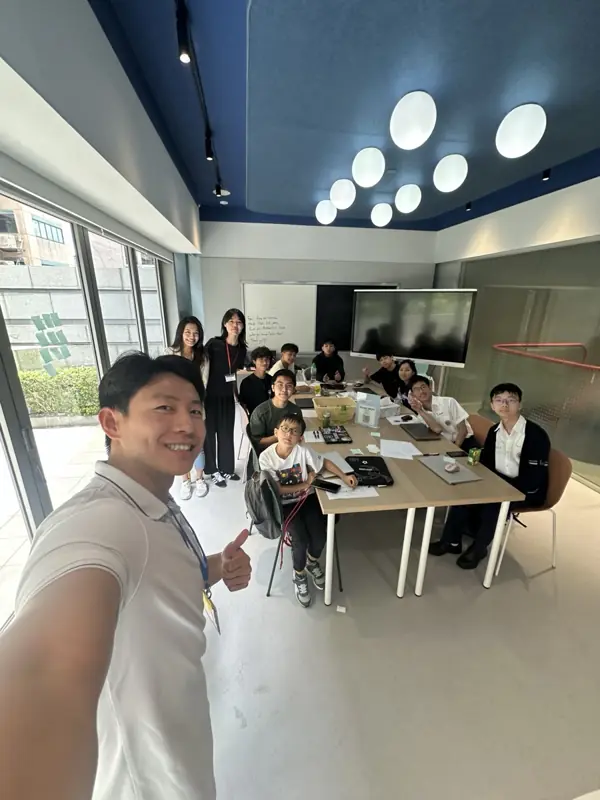
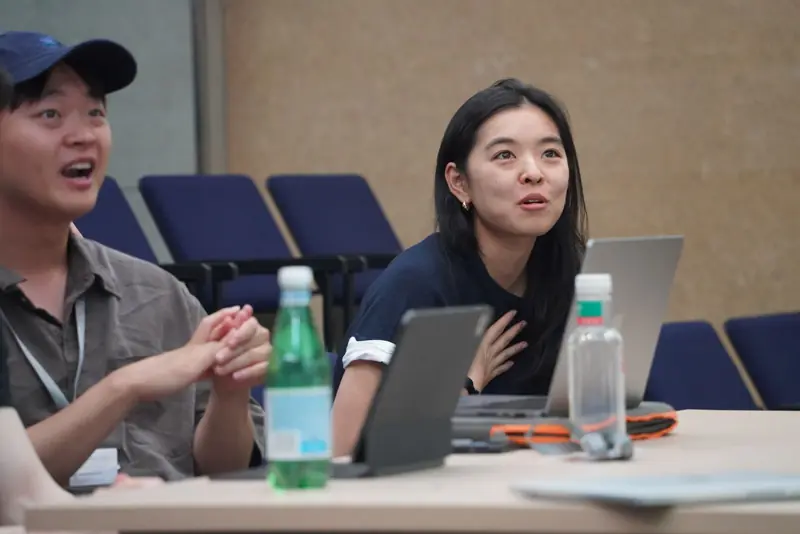
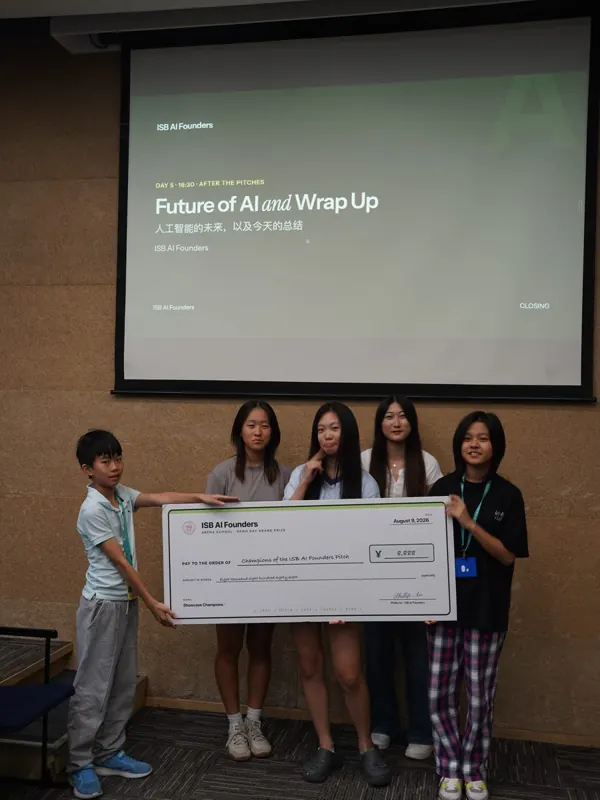
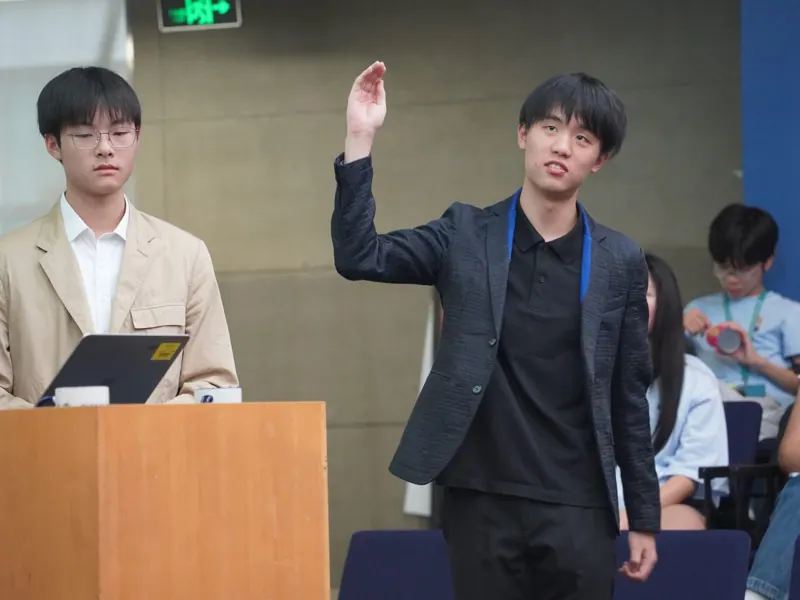
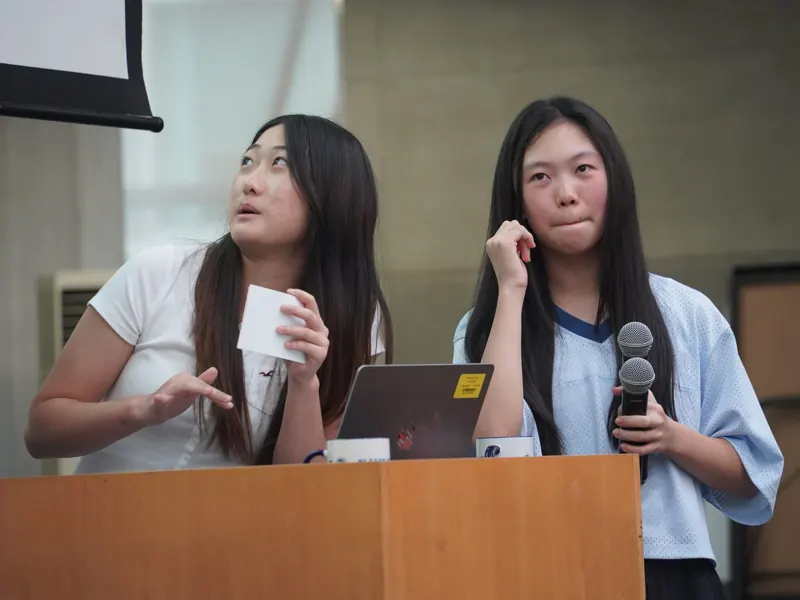
A five-day cohort with twenty students. A real demo day at the end, real product shipped, real pitch prize. Here's what happened.

0/10 NPS

Pilot Net Promoter Score across 20 students, run with Bodley Academy · Rhodes House at Oxford.

0days

A 10-year-old shipped a real AI product — sign-language-to-speech — in five days.

0students

went on to Stanford and to elite UK boarding schools.

A ten-year-old walked in not knowing what an API was.

Five days later he demoed a working app that turned sign language into spoken words — something he built because his cousin is deaf. No one assigned it. The morning tutor had cleared enough of the floor that his afternoon was free to chase a real problem, and a mentor who knew his name stayed in the room until it worked.

Two students walked out of the same week with letters from the program — one is now at Stanford, the other at a top UK boarding school. A third team came back from the demo evening having spent the prize check on a real domain name, because they had every intention of keeping the company running.

— from the Hong Kong pilot, 20 students, Summer 2025

Build it with us

If you've read this far, we want to hear from you.

There are four ways to be in this with us. Pick the one that fits — Phillip reads every message and writes back within three working days.

  • Schools
    Run a five-day cohort at your campus. Real demo day, real product. Curriculum stays with your team after we leave.
  • Parents
    Of a 12–22-year-old who likes to build things. We'll write back about the next public cohort and how to put your kid in the room.
  • Educators
    Adapt the model for your own program. Coffee, a long call, a visit to your school — whatever helps.
  • Students
    You like making things. Tell us what you're stuck on. The most interesting kids we've taught all started this way.
Personal · no list-share · no newsletter
Tell us about you.

Two minutes. One reply, written by Phillip.

The kids who are going to build the next century are alive right now.

AI handles knowledge transfer; humans handle judgment, taste, courage, and the felt experience of being believed in. Arena is the room where that happens.